More and more people in the Netherlands are dealing with a district heating network in their area, or are already connected to one. It’s logical to ask: does a heat pump still make sense, or is connecting to the district heating network the only or smartest option? The answer is more nuanced than you might think. You often have more freedom of choice than it initially seems.
What actually is a district heating network?
A district heating network, also known as city heating or block heating, provides heat collectively to homes in a neighborhood via an underground pipe network. The heat comes from a central source—such as industrial waste heat, geothermal energy, or a biomass plant—and is distributed via a heat interface unit in your home. You pay a connection fee, fixed annual costs, and a variable rate based on the amount of heat consumed.
The big difference compared to gas or electricity: with a district heating network, you cannot switch suppliers. You are tied to the heat provider active in your neighborhood, and that company sets the rates within the maximum limits determined annually by the ACM (Authority for Consumers & Markets).
Does a district heating network in the area mean a heat pump is no longer an option?
No. That is perhaps the most important misconception we want to clear up. If you live in an area where there is no district heating network (yet) but one is planned, the new Collective Heat Act will provide a legal right to opt out: you may choose an equivalent sustainable alternative, such as a heat pump, instead of being forced to connect.
There has also been recent clarity regarding subsidies. Minister Van Veldhoven (Climate and Green Growth) informed the House of Representatives that the ISDE subsidy for individual heat pumps will remain available in neighborhoods where a district heating network is planned, even though the Court of Audit previously advised stopping that subsidy in such areas. Government research showed that overlap between heat pumps and district heating networks occurs in only a small fraction of neighborhoods in practice, and that a subsidy cut had little support. In short: purchasing a heat pump while a district heating network is coming to your area is and remains a legitimate, subsidized choice. (Source: Vakblad Warmtepompen, July 2026)
If you are already connected to an existing district heating network, the situation is different. Switching to a heat pump usually means you have to buy out or cancel your connection to the district heating network, which, depending on your heat provider and contract, may be a factor in your decision.
How do you know if your neighborhood is a district heating area?
Not every neighborhood where a district heating network has been discussed will actually get one. Municipalities record their plans in their municipal heat vision or transition vision for heat, which can often be found on your municipality's website or via the Omgevingsloket. If your neighborhood is listed there as a “potential district heating area,” it does not mean that construction is finalized or that a timeline has been set. As long as your municipality has not formally designated your neighborhood as a district heating area under the Collective Heat Act, you can simply have a heat pump installed, including the ISDE subsidy.
District heating or heat pump: what is the exact difference?
Both solutions heat your home without gas, but the way they do so differs fundamentally.
With a district heating network, you largely relinquish control over your heat supply. You have no choice of supplier, your rate is fixed within the ACM maximum, and you do not benefit from your own solar power or favorable moments in the energy market. Connection costs are often lower than with a heat pump, but fixed annual charges are generally higher.
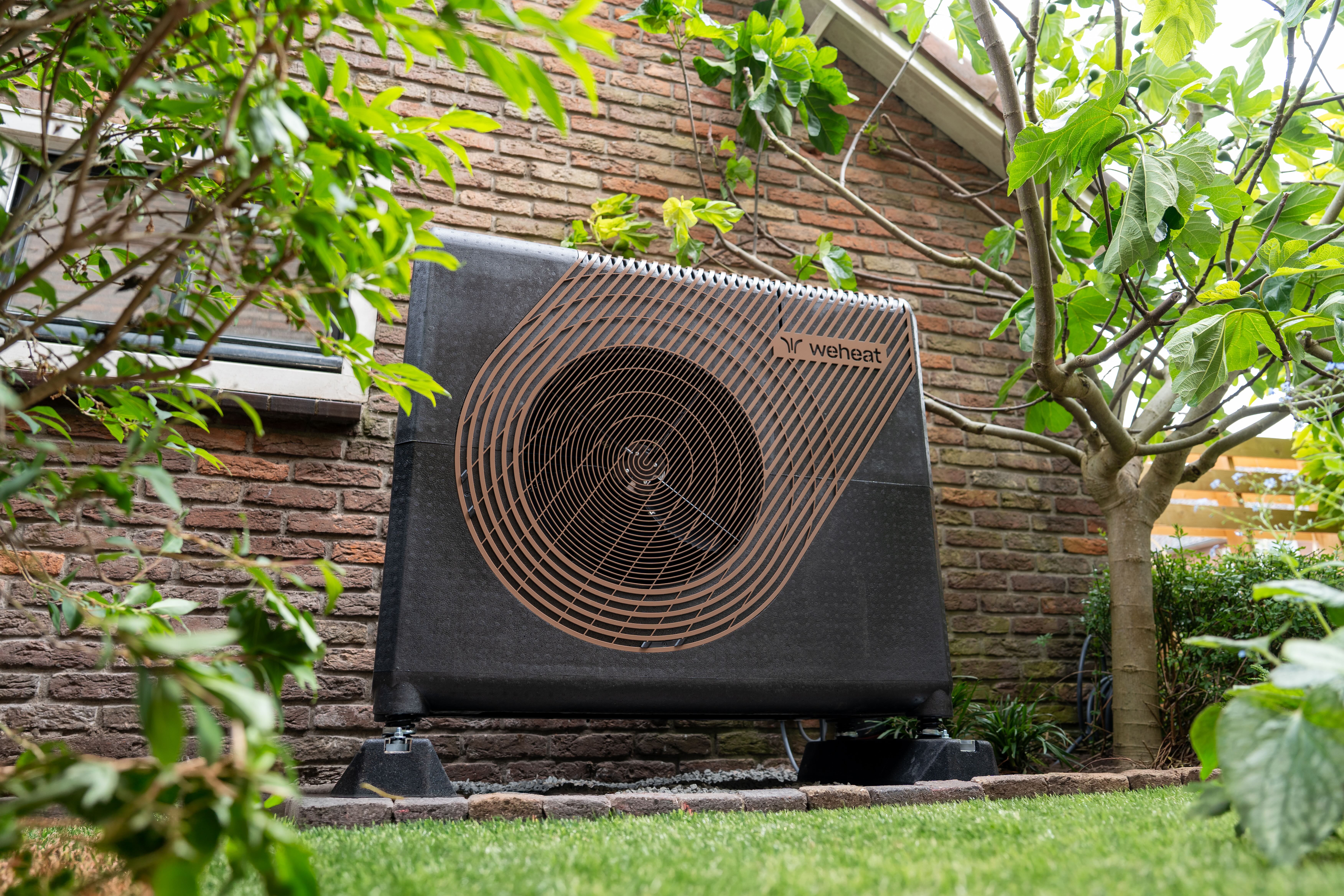
With a heat pump, you own your own installation. The purchase is a larger investment, but you get something in return: control over your energy costs, the use of your own solar panels, and the ability to benefit from a dynamic energy contract. Furthermore, a smart heat pump can determine for itself when it is more economical to heat, for example, at times when electricity prices are low or your solar panels are producing a lot of energy. This way, you use your home as a form of thermal storage without having to manage it yourself.
For whom is a heat pump the logical choice, even with a district heating network nearby?
A heat pump is particularly attractive if you want to keep control over your energy bills, if you already have or are planning to install solar panels, or if you don't want to be dependent on a single supplier with no freedom of choice. Also, if your home has not yet been designated as a definitive district heating area, or if the construction of the heating network is still years away, waiting for uncertainty can be an expensive gamble. You can install a heat pump now, with a subsidy, and without being dependent on the schedule of a heating company or municipality.
A district heating network, on the other hand, can be more attractive in densely populated urban areas where finding space for an outdoor unit is difficult, or if the connection fee in your neighborhood has been kept low due to municipal policy.
And if you are not yet sure which direction you want to take?
An intermediate step is also an option. A hybrid heat pump, which works in tandem with your existing central heating boiler, does not stand in the way of a future district heating network and already significantly reduces your gas consumption and energy bills. That is precisely why the government keeps these systems out of the discussion regarding ISDE subsidies and district heating networks: a hybrid heat pump is seen as a stepping stone toward further sustainability, not as a competitor to the district heating network. If you are still doubting between switching permanently to an all-electric heat pump or waiting for more clarity about the district heating network in your neighborhood, a hybrid solution can bridge that time without you having to commit to everything right now.
What does this mean for your situation?
The right choice depends on where you live, whether the district heating network is already in place or still planned, and what you want for your energy bills in the long term. Are you unsure whether a heat pump fits your situation, even with a district heating network nearby? Our installation partners are happy to think along with you and see what best suits your home.
Schedule a consultation


.webp)
.webp)


.webp)
.avif)
.jpg)
.jpg)


%201%20(1).webp)