Considering a heat pump? You are not alone. More people are choosing them to save money and help the planet. This guide explains what heat pumps are, how they work and what to expect, helping you decide whether one is right for your home.
What is an air-to-water heat pump?
A heat pump extracts warmth from outside air, even in freezing weather, and transfers it indoors using a heat exchanger and electricity.
There are two types:
Air-to-water heat pumps – the most common in the Netherlands and Europe. They heat water for central heating and domestic hot water.
Air-to-air heat pumps – heat your home by blowing warm air into rooms.
Both use electricity. Because they move heat rather than generate it, they are far more efficient than traditional boilers, which burn natural gas to heat water to high temperatures and circulate it.
Natural gas is a polluting fossil fuel. Burning it releases CO₂, while extraction can release methane. Both are powerful greenhouse gases accelerating global warming. Gas is also increasingly expensive. Polluting, inefficient and costly: there must be a better way. A heat pump provides it!
This article focuses on air-to-water heat pumps, the most common type and the kind Weheat makes.
The benefits of a heat pump: why switch?
Rising energy prices and increasingly unpredictable climate impacts demand effective solutions. A heat pump is a powerful way to reduce emissions and energy costs. Its main advantages are:
1. Better performance
A modern heat pump can achieve a COP (Coefficient of Performance) of 4 or more, providing up to four units of heat for every unit of electricity. That is a major improvement over a gas boiler, which produces around 0.9–0.96 kWh of heat per kWh of gas energy.
2. Lower CO₂ emissions
Heating is one of the biggest sources of household CO₂ emissions. A heat pump can dramatically reduce your footprint. Add electric cooking and green electricity, or generate your own with solar panels, and your home becomes entirely CO₂-free. Brilliant!
3. Lower energy bills
Using less or no gas shows on your bill. A heat pump can save €800–€1,200 annually. Who would not want that? The difference is especially noticeable when replacing an old boiler with a heat pump and low-temperature radiators.
4. Long-term return
A heat pump costs more to buy than a boiler, but pays for itself through ongoing energy savings, while benefiting the climate. Solar-panel owners are particularly well placed: they generate electricity for their heating system.
5. Government subsidy
In the Netherlands, ISDE can provide over €3,000 towards a heat pump. Applying through rvo.nl is straightforward. Other financing options include a sustainability fund or the National Heat Fund.
Heat pump benefits at a glance
✔ Uses renewable energy ✔ Less dependence on natural gas and fossil fuels ✔ Reduces CO₂ emissions by up to 100% ✔ Lower energy costs ✔ Cooling in summer ✔ Improves returns from solar panels ✔ 1 kWh of electricity delivers up to 4 kWh of heat
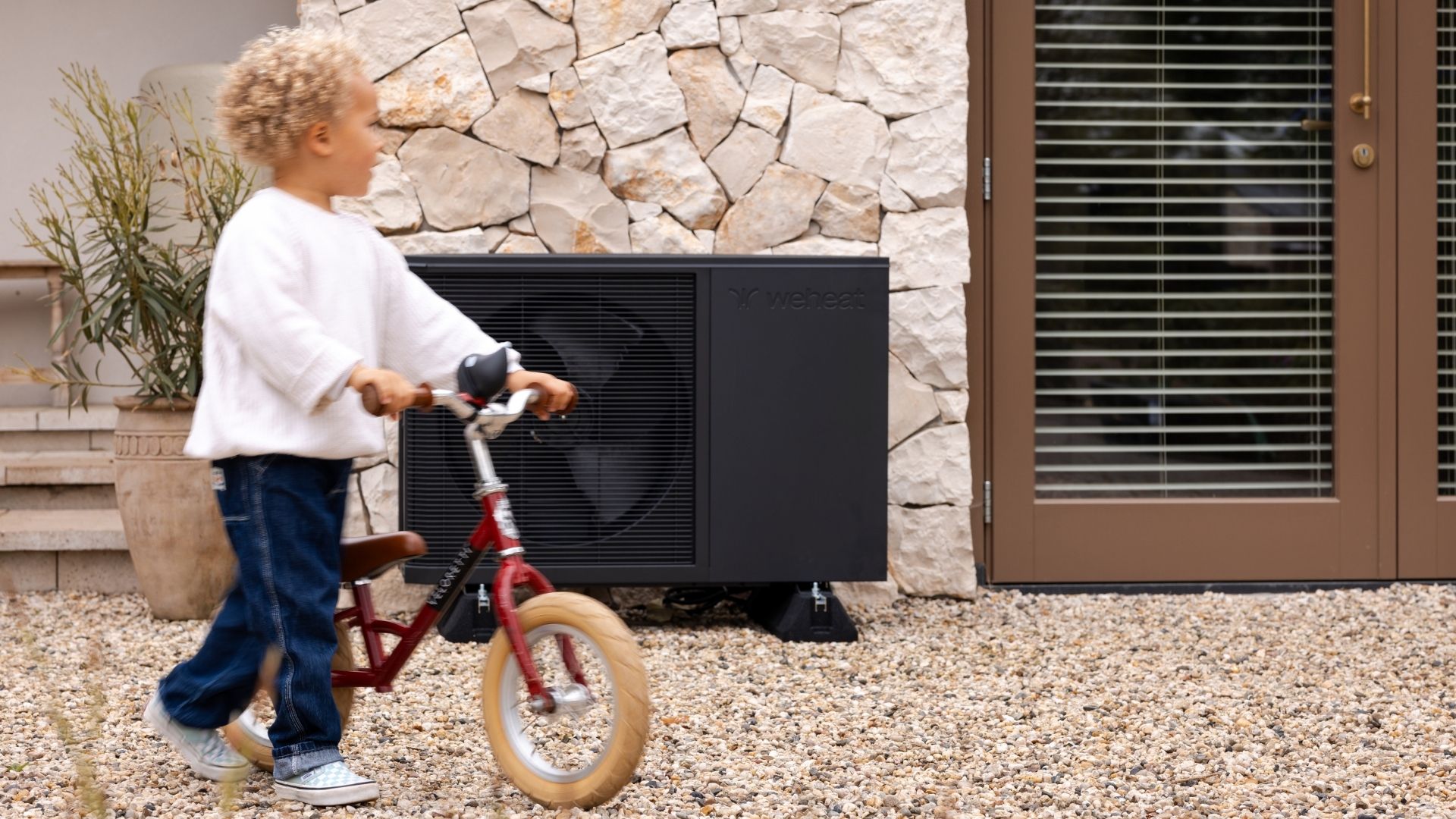
Weheat Flint
Air-to-water heat pump drawbacks: what to know beforehand
Heat pumps require a tailored approach, and not every home is suitable. They work best in well-insulated homes and need proper installation and adjustment.
1. Insulation and heating type
Because heat pumps run at lower temperatures than boilers, they work best with underfloor heating or low-temperature radiators. If your home lacks insulation, address that before considering a heat pump.
2. Outdoor space required
A heat pump needs outdoor space for its outdoor unit, in a well-ventilated location with few obstructions. The Weheat Blackbird is designed specifically for flat roofs, a highly suitable solution for many homes. Up onto the roof it goes!
3. Noise
Modern heat pumps are relatively quiet, around 40 dB, comparable to a refrigerator’s hum. Dutch regulations require this too: your heat pump must not disturb neighbours. Naturally! Heat pumps from Weheat are designed for minimal noise and can be switched to whisper mode through the app.
No system is perfect. Here are common concerns and solutions!
1. What does a heat pump cost?
Even after subsidy, a system typically costs €6,000–€10,000, including any home alterations. It is an investment, but smart software, low running costs and updates keep improving returns for years.
2. Is my home suitable?
Homes with limited insulation or unsuitable outdoor space may need alterations. Fortunately, much is possible. Contact a Weheat network installer without obligation to discover the options for your home.
3. What happens in freezing weather?
Heat pumps work at -10°C and even -20°C. Efficiency is slightly lower, but you will stay warm even in the harshest winters.
A boiler switches on and quickly heats to around 70 degrees, delivering heat in peaks and dips. A heat pump works differently: lower temperatures and steady heat delivery provide optimum comfort, keeping your home at the right temperature.
Is a heat pump worth it?
Absolutely. For homeowners seeking savings and sustainability, there is no better option. It is an investment and your home may need adjustments, but a heat pump is guaranteed to pay for itself.
Go gas-free with Weheat!
Start with good advice. Take Weheat’s online savings check or contact an installer in our network for fast, personalised insights.
Download the case study
Success!
Thank you for your message. We will get back to you as soon as possible.


.webp)
.webp)

.jpg)

.webp)
.avif)


%201%20(1).webp)